
Most People Think They Need Less Support Than They Do
Support to stay strong after 40 is something most people don’t think about until they’re already struggling with consistency.
One of the most common things I hear is some variation of, “I’ll figure it out myself.”
On the surface, that sounds perfectly reasonable. We live in a world where information is everywhere. You can watch exercise demonstrations on YouTube, download fitness apps in seconds, follow training programmes online, and access more health advice than at any point in history. In theory, everything you need is already available.
The problem is that information and implementation are two very different things.
Over the years, I’ve met plenty of people who know exactly what they should be doing. They understand the benefits of strength training. They know they need to move more, maintain muscle, and look after their health as they get older. If knowledge were the deciding factor, many of them would already be achieving the results they want.
The challenge usually isn’t knowledge; it’s consistency.
People start with good intentions. They download an app, follow a programme, or commit to exercising three times a week. For a while, everything goes well, but then work becomes busy, family commitments take priority, a holiday comes along, or life simply gets in the way. A few missed sessions become a few missed weeks, and before long they’re back where they started.
I’ve seen this happen with walkers who want to stay strong for the hills, golfers who want to keep enjoying a full round without feeling exhausted, and active adults who simply want to remain capable and independent as they get older. They aren’t lacking motivation or effort. In many cases, they’re trying very hard.
What they’re missing is a level of support that helps them keep going when enthusiasm inevitably fades.
That’s why I don’t believe the most important question is whether you can train on your own.
For many people, the better question is whether your current approach is helping you stay consistent enough to keep getting stronger year after year.
If the answer is no, the solution often isn’t more information. It’s more structure, accountability, and support than you originally thought you needed.
Table of Contents
Most People Think They Need More Coaching Than They Do

The other mistake I see is people assuming that the answer to every fitness challenge is more coaching.
If someone is struggling to stay consistent, not making progress, or feeling unsure about what to do next, it’s easy to conclude that they need a personal trainer standing beside them every session. Sometimes that’s true, but often it isn’t.
One of the reasons fitness can feel confusing is that coaching gets treated as an all-or-nothing decision. People tend to think they’re either completely on their own or working one-to-one with a coach several times a week. In reality, there’s a lot of middle ground between those two extremes.
Over the years, I’ve worked with plenty of people who initially believed they needed constant supervision. What they actually needed was a clear plan, a bit of accountability, and the confidence that they were heading in the right direction. Once those pieces were in place, they were perfectly capable of training successfully without someone watching their every move.
That’s an important distinction because the goal of coaching shouldn’t be to make people dependent on coaching.
The best coaching helps people become more capable, more confident, and more self-sufficient over time. It gives them the knowledge, structure, and support they need to succeed, while gradually building their confidence in their own ability to train well.
This is particularly relevant for adults over 40. Most people aren’t trying to become professional athletes. They’re trying to stay strong, healthy, and capable enough to enjoy the life they’ve built. They don’t necessarily need the highest level of support available. They need the right level of support for where they are right now.
That’s why I believe coaching exists on a spectrum.
At one end, you have complete independence. At the other, you have highly personalised one-to-one coaching. Between those two points are various levels of structure, accountability, guidance, and support. The right answer depends on the individual, their experience, their confidence, and what they’re ultimately trying to achieve.
The mistake isn’t having too much support or too little support.
The mistake is choosing a level of support that doesn’t match your needs.
Because when you find the right balance, training becomes far more sustainable. You build confidence, develop capability, and start making progress without feeling as though you’re relying on someone else to keep you moving forward.
Why Most People Don’t Have a Motivation Problem
One of the biggest misconceptions in fitness is that people fail because they lack motivation.
It’s an easy conclusion to reach. If you’re not exercising consistently, it must mean you’re not motivated enough. If you’ve stopped following a programme, you must have lost your discipline. If you’re struggling to stay strong as you get older, perhaps you just need to try harder.
The problem is that real life rarely works like that.
Most of the people I speak to are highly motivated in other areas of their lives. They run businesses, manage households, raise families, look after properties, volunteer in their communities, and somehow juggle countless responsibilities every week. These aren’t lazy people. They’re capable, driven people with busy lives.
What often happens is that they mistake a lack of consistency for a lack of motivation.
When someone starts a new fitness programme, motivation is usually high. They’re excited. They have a clear goal. They can see themselves sticking to it.
For a few weeks, everything feels relatively easy, but then life intervenes. Work becomes demanding, family commitments pile up, a holiday appears in the diary, the weather changes, or a minor injury crops up.
Suddenly, the plan that looked straightforward a month ago becomes much harder to follow.
That’s when many people start blaming themselves, when in reality the issue is often much simpler: the programme relied too heavily on motivation and not enough on structure.
Motivation is useful, but it’s unreliable. Some days you’ll feel enthusiastic about training. Other days you won’t.
That’s perfectly normal.
The people who stay strong and capable over the long term aren’t necessarily the most motivated people. They’re usually the people who have built systems that help them keep going even when motivation is nowhere to be found.
I’ve seen this repeatedly with walkers, golfers, hikers, and active adults across the Borders. They genuinely want to look after themselves. They know exercise matters. They understand the benefits of strength training. Yet they still struggle to maintain momentum when life becomes busy.
The difference is rarely knowledge or intention. It’s having enough structure to make consistency easier.
That’s why I tend to think of support differently. Good support isn’t there to motivate you every day. It’s there to reduce the chances of you falling off track when life inevitably gets in the way. It provides enough accountability, guidance, and routine that training becomes part of your life rather than something you only do when you feel inspired.
Once people understand that, they often stop asking, “How do I stay motivated?” and start asking a better question: “How do I create a system that helps me stay consistent?”
Because when it comes to staying strong after 40, consistency will always beat motivation in the long run.
The Real Cost of Getting This Wrong
One of the reasons I think this subject matters so much is that most people don’t notice the problem until it’s been happening for quite a while.
Very few people wake up one morning and suddenly feel old. What I see more often is a gradual change that takes place over several years.
At first it’s easy to ignore. A walk feels slightly harder than it used to. Recovery takes a little longer. You find yourself thinking twice about carrying something heavy or tackling a steep hill. Nothing feels serious enough to worry about, so life carries on as normal.
The challenge is that these small changes have a habit of accumulating.
People naturally adapt to them without realising it. They start choosing the easier route instead of the more demanding one. They stop doing certain walks they used to enjoy. They think twice about a long day in the hills. A round of golf that once felt comfortable becomes surprisingly tiring by the final few holes.
I’ve seen this happen with active, capable people who are still doing plenty. They’re walking regularly, staying busy and generally looking after themselves.
Yet when we start talking, they often admit that there are things they no longer do as often as they once did. Not because they’ve consciously decided to stop, but because those activities no longer feel quite as easy or enjoyable.
That’s the part many people underestimate. When physical capability starts to decline, it isn’t just strength that changes. Your decisions begin to change as well. You become a little more cautious. You avoid certain situations. You start working around your limitations rather than addressing them.
For some people it’s the hills they stop tackling. For others it’s travelling less confidently, avoiding physical jobs around the house, or feeling less comfortable getting down onto the floor and back up again.
None of these things seem particularly significant on their own, but together they can have a surprisingly large impact on quality of life.
That’s why I don’t think the biggest risk is missing a workout or falling off track for a few weeks. The bigger risk is allowing years to pass while strength, confidence and physical capability gradually move in the wrong direction.
This isn’t really about exercise. It’s about protecting the ability to keep doing the things that make life enjoyable.
Walking the routes you love, travelling where you want to go, playing golf, working outdoors, spending time with family and maintaining your independence all rely on one thing: having a body that’s capable of supporting the life you want to live.
The encouraging part is that this isn’t something that happens overnight, which means there’s usually plenty of opportunity to do something about it.
In my experience, most people don’t need extreme training programmes or hours in the gym. They simply need enough structure, consistency and support to keep moving forwards rather than gradually slipping backwards.
Four Levels of Support Explained
One of the reasons people struggle to choose the right approach is that they often assume there are only two options.
Either you train completely on your own, or you hire a personal trainer.
In reality, most people sit somewhere between those two extremes.
Over the years, I’ve worked with people who have been successful at every level of support. The important thing isn’t choosing the highest level available. It’s choosing the level that gives you enough structure, accountability, and guidance to stay consistent.
Level 1: Train Completely Alone
There is absolutely nothing wrong with training independently if it suits your personality and experience.
For some people, complete freedom is exactly what they want. They enjoy planning their own sessions, making their own decisions, and working things out for themselves. It’s also the most flexible and lowest-cost option available.
The challenge is that training alone requires a high degree of self-motivation and self-management. You need to know what you’re doing, understand how to progress over time, and be honest enough with yourself to keep showing up consistently.
This is where many people come unstuck. They start with good intentions, but without any external accountability it’s easy for sessions to be skipped, routines to become repetitive, and progress to stall without them really noticing.
For highly self-motivated people, training alone can work very well. For most people, however, it’s often harder than they initially expect.
Level 2: Follow a Structured Programme
The next step up is following a structured programme.
This immediately solves one of the biggest problems people face when training alone: uncertainty. Instead of deciding what to do every time you exercise, you have a clear plan to follow. That usually leads to better progression and more confidence because you’re no longer guessing your way through each session.
Many people do very well at this level, particularly if they’ve already developed a consistent exercise habit.
The limitation is that you’re still responsible for everything else. Nobody notices if you miss a week. Nobody checks whether you’re progressing appropriately. Nobody helps you adapt the plan when life gets busy or circumstances change.
In other words, the programme provides direction, but you’re still relying on yourself to stay on course.
Level 3: Structured Group Coaching
For many adults, this is where things start to click.
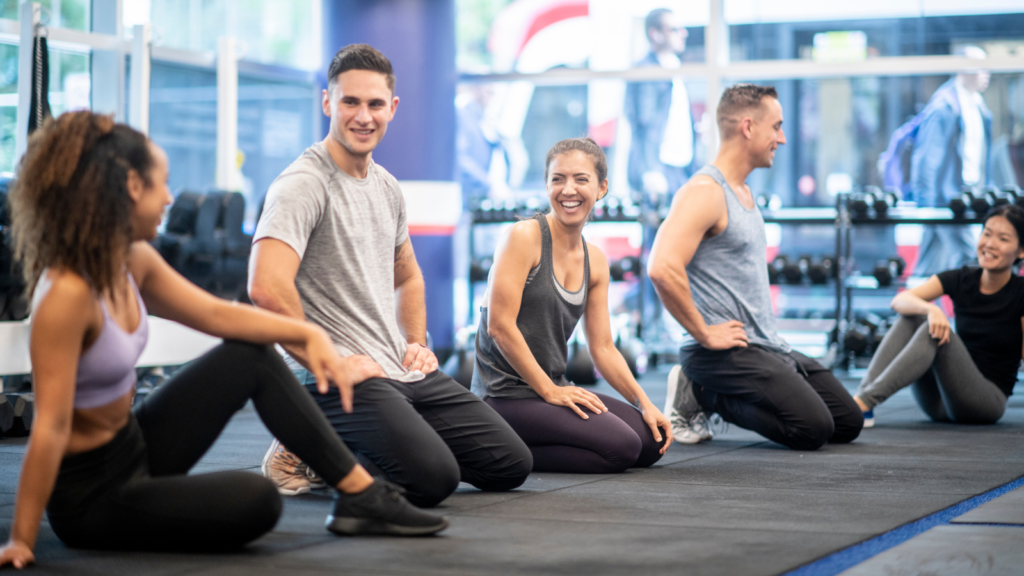
Structured group coaching combines the benefits of having a clear plan with the added support of accountability, guidance, and community. You know what you’re doing, you know why you’re doing it, and there are other people around you working towards similar goals.
What I’ve found over the years is that this level of support often strikes the right balance. You receive enough coaching to stay consistent and keep progressing, but not so much that you become dependent on somebody else for every decision.
There’s also something powerful about training alongside other people. Not because it becomes competitive, but because it becomes normal. Turning up becomes part of your routine rather than a constant battle with motivation.
The main trade-off is that you won’t receive the same level of individual attention as you would in a one-to-one setting. For most people, that’s a perfectly reasonable compromise. For others with more complex needs, additional support may be appropriate.
Level 4: One-to-One Coaching
At the highest level of support sits personal training and one-to-one coaching.
This approach provides maximum individual attention. Programmes can be tailored very specifically, sessions can be adapted in real time, and every aspect of training can be adjusted to suit the individual.
There are situations where this level of support makes complete sense. Someone recovering from injury, managing a complex health condition, rebuilding confidence after a long period of inactivity, or working towards a highly specific goal may benefit enormously from one-to-one coaching.
The trade-off is that it comes at a higher financial cost, and if it’s not handled well, it can sometimes create dependence. I’ve met people who have worked with trainers for years yet still don’t feel confident exercising without them.
Personally, I think good coaching should move in the opposite direction. It should leave you feeling more capable, more knowledgeable, and more confident than when you started.
That’s why I don’t believe there’s a universally “best” level of support. The right choice depends on where you are today, how confident you feel, and what will help you stay consistent over the long term.
For most people, the goal isn’t maximum support. The goal is enough support to keep moving forwards.
Why Accountability Becomes More Important After 40
One of the reasons many people struggle with fitness as they get older has very little to do with exercise itself. More often, it has to do with the amount of life they are trying to manage around it.
When you’re younger, you often have fewer competing demands on your time. By the time most people reach their 40s, 50s, and beyond, that usually changes.
Work is demanding, family commitments don’t disappear, there are properties to maintain, people to look after, holidays to organise, and countless other responsibilities competing for attention.
Even people who genuinely value their health can find themselves pushed further down their own priority list than they would like.
That’s why I’ve never been a fan of blaming people for being inconsistent. In many cases, inconsistency isn’t caused by a lack of discipline. It’s the natural result of trying to fit exercise into a busy life without having a system that supports it.
One of the observations I’ve made over the years is that children don’t need calendars, but adults do. A child can be active simply because movement is built into their day.
Adults are different. If something isn’t scheduled, planned, or intentionally prioritised, there’s a good chance something else will fill the space instead.
That’s where accountability becomes useful, but I think the word is often misunderstood. Some people hear accountability and think it means being checked up on, monitored, or told off when they miss a session.
That’s not how I see it.
Good accountability is simply a system that helps you follow through on the things you’ve already decided are important.
For some people, that support comes from a coach. For others, it comes from a structured programme, a regular group, or simply having set times in the week where training becomes part of the routine.
The format matters less than whether it helps you keep going when motivation is low, work is busy, the weather is poor, or life becomes complicated.
I’ve found that the people who stay strong and capable over the long term aren’t necessarily the most motivated people. They’re often the people who have built reliable systems around their training.
They don’t rely on feeling inspired every week. They rely on habits, routines, accountability, and enough support to make consistency easier.
That’s why I don’t view accountability as a sign of weakness. I view it as a practical solution to a very real problem. When life gets busy, having a system is often the difference between staying on track and gradually drifting away from the habits that help you stay strong, healthy, and capable.
Why Consistency Matters More Than Perfect Programming
One of the easiest traps to fall into is believing that the answer is always a better programme.
I’ve seen people spend years searching for the perfect training plan. They move from one approach to another, try different apps, download new workouts, watch YouTube videos, and constantly look for the thing that will finally make everything click. Each new programme arrives with a burst of enthusiasm because it feels like a fresh start.
The problem is that the quality of the programme is rarely the thing holding them back.
Most of the time, there isn’t a huge difference between two sensible strength training programmes. They might organise exercises differently or use slightly different methods, but the fundamentals are usually very similar. The body responds to consistent effort over time, not to clever programme design.
What tends to make the biggest difference is whether the programme actually gets followed.
That might sound obvious, but it’s remarkable how often it’s overlooked. People become so focused on finding the ideal plan that they forget to ask a much more important question: “Can I realistically stick to this?”
A programme that looks fantastic on paper isn’t much use if it requires six training sessions a week and your schedule only allows for three. Equally, a programme that demands perfect adherence can quickly become frustrating when work, family, holidays, and everyday life inevitably get in the way.
This is one of the reasons I place such a high value on sustainability. The goal isn’t to find something that works brilliantly for six weeks. The goal is to find something that still works six months from now, and ideally six years from now.
When I look at the people who maintain their strength and capability as they get older, they’re rarely doing anything particularly extreme. They aren’t constantly changing direction or chasing the latest fitness trend. More often than not, they’re following a simple plan, turning up regularly, and allowing time to do its job.
That’s where long-term capability comes from: repeated actions performed consistently over time. Strength is built that way. Balance improves that way. Confidence grows that way. The ability to keep hiking, golfing, travelling, and enjoying an active lifestyle is protected that way.
If there’s one lesson I’ve learned over the years, it’s that the perfect programme is worthless if you don’t do it.
A good programme followed consistently will almost always outperform a perfect programme that’s abandoned after a few weeks. That’s why I believe the best training plan isn’t necessarily the most sophisticated one. It’s the one that fits your life well enough that you can keep showing up and doing the work year after year.
The Pattern I See Time and Time Again
One of the advantages of working with people for a long time is that you start to notice recurring patterns. The details change from person to person, but the underlying challenge is often remarkably similar.
I’ve seen it with golfers who want to keep enjoying a full round without feeling exhausted by the final few holes. I’ve seen it with walkers and hikers who want to continue exploring the Borders countryside for years to come.
I’ve seen it with people running farms, managing properties, working demanding professional jobs, and enjoying active retirements.
On the surface, these people appear quite different, but when we sit down and talk, the same themes come up again and again.
Most are not lacking effort, information, or good intentions.
They already know that strength training is beneficial. They understand the importance of staying active, and many have tried gyms, classes, online workouts, fitness programmes, or personal training at various points over the years. Very few are starting from a place of complete ignorance.
That’s why I rarely believe the problem is simply a lack of knowledge. In many cases, people know far more about exercise than they give themselves credit for.
The challenge is usually more practical. Life gets busy, routines get disrupted, training becomes inconsistent, and before long they are no longer doing the things they intended to do.
What I find particularly interesting is that most people don’t recognise this straight away. Instead, they assume they need a different programme, a different gym, or a completely new approach.
Sometimes that may be true, but often the real issue is that the previous solution was never supported by a system that made consistency realistic.
Over the years, that has probably become one of my biggest observations. The people who stay strong and capable as they get older are not necessarily the ones with the most knowledge, the best genetics, or the most impressive training plans.
More often than not, they are the people who have found a level of structure and support that fits their life well enough to be maintained year after year.
So rather than asking, “What’s the best programme?”, I think a better question is: “What level of support will help me keep doing this consistently?”
How to Know You’re Using Too Little Support
One of the challenges with training independently is that it can be difficult to spot when your current approach is no longer working.
Most people don’t wake up one morning and decide they’ve stopped making progress. More often, things gradually drift. A few missed sessions become a few missed weeks. The plan that felt clear a month ago becomes something you’re no longer following.
Before long, you’re thinking about starting again rather than building on what you’ve already done.
That’s why I think it’s worth being honest with yourself about the results your current approach is producing.
If you’ve found yourself repeatedly restarting exercise programmes, there’s a good chance you’re trying to manage too much on your own. The occasional setback is perfectly normal, but if every new plan follows the same pattern of enthusiasm, inconsistency, and eventually stopping altogether, the issue may not be the programme itself.
Another common sign is a lack of progression. You’re exercising, you’re staying active, but when you look back over the last year, it’s difficult to identify what has actually improved. You don’t feel noticeably stronger, more capable, or more confident than you did twelve months ago. Activity is still happening, but meaningful progress is harder to see.
Uncertainty can also be a clue. Many people spend a surprising amount of energy wondering whether they’re doing the right exercises, following the right programme, or training often enough. That uncertainty creates hesitation, and hesitation often leads to inconsistency.
I’ve also found that confidence plays a bigger role than people realise. Some individuals know they would benefit from strength training but never quite feel comfortable enough to commit fully. They’re unsure where to start, worried about doing something incorrectly, or uncertain whether they’re progressing at the right pace. As a result, they stay on the edge of taking action rather than moving forwards with confidence.
None of this means you’re failing. In fact, many people find themselves in this position because they’re genuinely trying to do the right thing.
The question is whether your current level of support is helping you achieve the outcome you want.
The question I would encourage you to ask is simple: are you getting the results you want despite your current approach?
If the answer is yes, keep going. If the answer is no, it may not mean you need a completely different programme. It may simply mean you need a little more structure, guidance, or accountability than you’re currently getting.
How to Know You’re Using Too Much Support
Up to this point, we’ve talked a lot about the problems that can come from having too little support.
The reality, however, is that support can become a problem at the other end of the spectrum as well.
This isn’t something that gets discussed very often in the fitness industry because most businesses naturally focus on selling more coaching rather than helping people become less reliant on it. Over the years, though, I’ve occasionally met people who have been receiving support for a long time but still don’t feel confident making decisions for themselves.
They’ve worked with a coach for months, sometimes years, yet they still feel uncertain if that coach isn’t there. They second-guess every decision, look for reassurance before every change, and become uncomfortable whenever they’re asked to train independently.
That’s usually a sign that something has gone wrong.
Good coaching should increase confidence, not reduce it.
One of the questions I sometimes ask people is whether they feel more capable today than when they first started. Not stronger or fitter, but more capable. Do they understand their body better? Do they feel more confident exercising on their own? Could they continue making sensible decisions if their coach disappeared tomorrow?
Those are important questions because the ultimate purpose of coaching isn’t to create long-term dependence. It’s to provide support while helping someone build the confidence and capability to manage more for themselves over time.
That doesn’t mean everyone should train completely alone. Many people enjoy having ongoing guidance, accountability, and structure, and there is absolutely nothing wrong with that. The issue arises when support becomes a substitute for confidence rather than a tool for building it.
I’ve found that the healthiest coaching relationships tend to be partnerships. The coach provides expertise, guidance, and accountability, while the individual gradually develops the knowledge and confidence needed to take greater ownership of their health and fitness.
When that happens, support becomes empowering rather than restrictive.
That’s why I don’t believe the goal should be to receive as much coaching as possible. The goal should be to receive enough support to keep progressing while becoming increasingly confident in your own ability to look after yourself.
In other words, the best coaching should leave you feeling stronger, healthier, and more capable than before, not more dependent than when you started.
What Most Adults Actually Need
One of the reasons fitness can feel so confusing is that the examples we see are often at the extremes.
On one side, there are people training six days a week, following highly structured programmes, tracking every detail, and treating fitness as a major part of their identity.
On the other side are people doing very little at all and hoping that occasional bursts of activity will be enough to maintain their health.
Most adults don’t fit comfortably into either category.
The people I work with are usually trying to balance exercise with everything else that matters in their lives.
They have careers, families, hobbies, holidays, homes to maintain, and responsibilities that aren’t going away any time soon. They want to stay strong, healthy, and capable, but they don’t want fitness to become a full-time job.
That is why I think many people overestimate what is required. They imagine staying strong means training almost every day, taking on extreme fitness challenges, or needing constant supervision.
For most adults, that simply is not realistic, and in many cases it is not necessary either.
What tends to work better is something far simpler: two or three well-structured strength sessions each week, a clear sense of progression, and enough support to keep you consistent when life inevitably gets busy.
Combined with an active lifestyle, that can be enough to maintain strength, support bone health, improve confidence, and help preserve the physical capability that becomes increasingly important as we age.
This approach aligns closely with the current recommendations from the NHS, which advise adults to include muscle-strengthening activities at least twice per week alongside regular physical activity.
That usually means having a clear plan, some form of progression, and enough accountability to keep things moving forwards.
For some people, that support comes from a coach. For others, it comes from a structured group environment, a training partner, or a programme they genuinely enjoy following. What matters is finding an approach that fits your life well enough to be maintained over the long term.
This is something I touched on in my article about Why Being Active Doesn’t Always Mean You’re Staying Strong After 40, where I explained why activity alone isn’t always enough to maintain strength and capability as we get older.
The same principle applies here. The goal isn’t to find the most impressive training plan. The goal is to find an approach that helps you keep showing up year after year.
When you strip away the complexity, that is what most adults actually need: a simple, structured approach that gives them enough guidance to keep progressing and enough accountability to stay consistent.
Not something extreme, not something that takes over their life, and not something that relies on motivation being high every week.
The aim is much simpler than that. It is to build enough strength, confidence, and physical capability to keep doing the things that matter for as long as possible.
Where Elements Fits
By this point, you can probably see that the answer is not usually more exercise for the sake of doing more exercise. For most adults, the better answer is a more structured approach that helps them stay consistent, progress safely, and maintain the physical capability they need for everyday life.
That is where Elements fits.
Elements is not designed to be hardcore training, full-time personal training, or another extreme fitness programme. It is designed for adults who want to stay strong, mobile, confident, and capable as they get older, without feeling as though fitness has to take over their life.
The focus is on structured strength training, sensible progression, and enough coaching to help you feel confident in what you are doing. It also supports the things that become increasingly important with age: mobility, bone health, balance, resilience, and the ability to keep doing the activities you enjoy.
What matters most is that the programme is built around long-term capability rather than short-term intensity.
The goal is not to exhaust you, overwhelm you, or make you dependent on constant one-to-one supervision. The goal is to give you the structure, accountability, and guidance you need to keep moving forwards.
For many adults, that is the missing middle ground. It is more supportive than trying to figure everything out alone, but less rigid and dependent than traditional personal training.
If you are looking for a structured way to stay strong after 40, the Elements programme is designed to help you do exactly that.
Key Takeaways
- Most adults do not need maximum coaching to stay strong after 40; they need the right level of support.
- Too little support can lead to inconsistency, uncertainty, lack of progression, and constantly restarting.
- Too much support can sometimes create dependence if it does not build confidence and autonomy over time.
- Motivation is unreliable, especially when work, family, travel, and everyday responsibilities compete for attention.
- Accountability is not a weakness; it is a practical system that helps you follow through on what matters.
- The best programme is not the most impressive one. It is the one you can follow consistently.
- For many adults, two or three structured strength sessions each week are enough to make meaningful progress.
- Structured group coaching often provides a useful middle ground between training alone and relying on one-to-one personal training.
- The goal is not to spend more time exercising; it is to build the strength, confidence, and capability to keep living life on your terms.
- Elements is designed to provide structure, accountability, coaching, and progression without making training feel extreme or overwhelming.
Frequently Asked Questions
Do I need a personal trainer after 40?
Not necessarily. Many adults over 40 can make excellent progress without one-to-one personal training. What matters most is having enough structure, guidance, and accountability to stay consistent and continue progressing safely.
Can I get stronger without a coach?
Yes, you can. However, many people find that some level of coaching or support helps them stay consistent, avoid common mistakes, and maintain progress over the long term.
How often should I strength train after 40?
For most adults, two or three well-structured strength training sessions per week are enough to improve or maintain strength, support bone health, and build long-term physical capability.
What’s the difference between coaching and personal training?
Personal training is typically one-to-one and highly personalised. Coaching is a broader term that can include personal training, group coaching, accountability, programme design, and ongoing guidance. Coaching exists on a spectrum rather than being a single service.
Is group coaching effective?
For many adults, group coaching provides an excellent balance of accountability, guidance, community, and affordability. It often delivers enough support to stay consistent without creating dependence on a coach.
Why do people stop making progress?
In most cases, people stop making progress because consistency breaks down. Life becomes busy, routines change, and training becomes less structured. The issue is often adherence rather than a lack of knowledge or effort.
How much accountability do I need?
The answer varies from person to person. The right amount of accountability is the amount that helps you consistently follow through on your intentions without feeling overly dependent on external support.
Can beginners benefit from coaching?
Absolutely. Coaching can help beginners build confidence, learn good habits, and develop a clear understanding of how to train safely and effectively.
Is one-to-one coaching worth it?
For some people, yes. Those recovering from injury, managing complex health concerns, rebuilding confidence, or working towards highly specific goals may benefit greatly from one-to-one support.
What’s the best way to stay consistent with exercise?
The best approach is usually the one that fits your lifestyle. A realistic plan, a manageable schedule, and an appropriate level of accountability are often more important than finding the perfect programme.
How much support do most adults actually need?
Most adults don’t need maximum support. They typically benefit from a clear plan, simple progression, regular accountability, and enough coaching to help them stay consistent over time.
Is Elements suitable if I’m not a gym person?
Yes. Elements was designed for adults who want to stay strong, mobile, and capable without feeling as though they need to become fitness enthusiasts. The focus is on long-term health, confidence, and physical capability rather than extreme training.
Choosing the Right Level of Support
If there’s one thing I hope you take away from this article, it’s that there isn’t a single correct level of support that works for everyone.
Some people do well training independently, others benefit from a structured programme, and some need the accountability and community that comes from group coaching.
There are also times when one-to-one support is absolutely the right choice, especially when someone is returning from injury, rebuilding confidence, or dealing with more specific needs.
The question is not whether one option is better than all the others. The better question is which level of support gives you the best chance of staying consistent.
Most people don’t struggle because they chose the wrong exercise. They struggle because they haven’t found an approach that fits their life well enough to keep going with it.
That matters because strength is not built in occasional bursts. It is built through repeated, sensible action over time.
The people who continue hiking the hills they love, enjoying a full round of golf, travelling with confidence, managing the demands of country life, and maintaining their independence as they get older are rarely following the most complicated programmes.
More often, they have found a sustainable routine and enough support to keep doing it.
That is why I don’t think the goal is to find the maximum amount of support available. The goal is to find enough support to keep moving forwards when life is busy, motivation changes, and other responsibilities compete for your attention.
Ultimately, the best programme is not the one that looks most impressive on paper. It is the one you are still following a year from now.
If you’re looking for a structured approach that combines strength training, progression, accountability, and support without turning fitness into a full-time job, you can learn more about the Elements programme here.


