
Strength training over 40 Scottish Borders residents can start safely, simply, and more effectively than most people realise.
But if you’re beginning (or returning) to strength training in your 40s, 50s, or beyond, it’s completely normal to feel unsure about where to start.
At Putton Mill Fitness, we meet people every week who want to feel stronger, move better, and age well — but they’re not confident about technique, worried about injury, or worried they’ve “left it too late.”
The truth is, you’re not behind. You simply need a clear, structured way to begin.
Many people in the Borders try to start strength training by copying YouTube workouts, following random routines, or lifting weights without a plan. It usually leads to frustration, stalled progress, or aches that make training feel intimidating.
The good news is that strength training doesn’t need to be complicated or extreme to work. With the right approach, adults over 40 can build strength faster, stay injury-free, and feel more confident in everyday life.
In this guide, you’ll learn:
- Why strength training becomes more important after 40
- The mistakes most beginners unknowingly make
- How to start safely, even if you’ve never lifted before
- How to track progress without obsessing over the scales
- Why structured coaching like GYM+ helps you improve far quicker than training alone
Let’s break down exactly how to start strength training the smart way — and why it’s one of the best investments you can make in your long-term health.
Table of Contents
Why Strength Training Matters More After 40

Why does strength training become even more important once you reach your 40s and beyond?
Because after 40, your body naturally loses muscle, strength, and stability unless you actively train to maintain them.
Strength training slows — and even reverses — these changes, helping you stay mobile, confident, and injury-free.
1. You naturally lose muscle every decade after 30
Research shows adults can lose 3–8% of muscle mass per decade after 30, and the rate accelerates after 50.
Less muscle means lower metabolism, reduced strength, slower recovery, and greater fatigue — all of which make everyday tasks harder.
Strength training is the single most effective way to rebuild and protect that muscle.
2. It keeps your joints healthier and more resilient
Many people in the Scottish Borders believe their joint pain comes from age, when in reality it’s often caused by weakness.
Stronger muscles support stronger joints — especially hips, knees, and lower back — reducing discomfort and improving balance and stability.
3. It boosts bone density
Bone density naturally declines as we age, especially in women.
Strength training places controlled stress on the bones, which stimulates them to stay strong and resilient. That means better long-term health, fewer injuries, and greater confidence in daily movement.
4. It improves long-term health markers
Strength training supports heart health, metabolism, blood sugar regulation, and overall wellbeing.
It’s one of the simplest, highest-ROI activities anyone over 40 can do — especially when combined with walking and good recovery.
5. It enhances energy, mood, and daily quality of life
People often assume energy goes down with age.
In reality, structured strength training helps increase energy, improve sleep, and boost mental wellbeing. You simply feel better when your body feels stronger.
So What?
Strength training isn’t about lifting heavy or chasing intense workouts.
It’s about staying capable, confident, and strong as you age — so that everyday life feels easier, not harder.
And with the structured, coach-supported approach inside GYM+ at Putton Mill Fitness, anyone over 40 can start safely, build strength gradually, and enjoy training again — without fear of injury or overwhelm.
The Most Common Mistakes People Over 40 Make When Starting Strength Training

What tends to go wrong when people in their 40s, 50s, and beyond start strength training?
Most people don’t struggle because of age — they struggle because they’re guessing.
Without proper guidance, beginners fall into a handful of common mistakes that limit progress and increase the risk of aches, pains, or frustration.
1. Starting with workouts that are too intense
Many people think strength training must be fast, heavy, or exhausting.
But after 40, recovery becomes more important. Beginning with intensity instead of technique often leads to soreness, flare-ups, or burnout.
At Putton Mill, we teach members to build good movement first — strength comes naturally once the foundation is solid.
2. Moving with poor technique or no coaching
Technique matters more as we age.
If your form isn’t right, the body naturally compensates, placing stress on areas that aren’t meant to handle it. That’s how discomfort starts — especially in the lower back, knees, and shoulders.
Coaching solves this. Inside GYM+, every member gets guidance to ensure movements feel good, safe, and effective.
3. Training randomly without a structured plan
Jumping between workouts might feel productive, but without progression, your body simply plateaus.
Progression — gradually increasing load, reps, or complexity — is what stimulates real strength gains.
GYM+ provides structured plans that evolve with your ability, your confidence, and your weekly schedule.
4. Avoiding strength training altogether due to fear of injury
Many people worry that lifting weights will cause harm, when the opposite is true.
Strength training, when done correctly, is one of the safest and most protective things you can do for your joints and long-term health.
The key is starting light, moving well, and progressing at the right pace — exactly how we coach at Putton Mill Fitness.
5. Not prioritising recovery
Recovery needs change as we get older.
If sleep, hydration, walking, and rest days are ignored, energy drops and progress stalls.
We remind members that recovery isn’t optional — it’s part of the programme.
Most strength-training setbacks after 40 come from missing structure, guidance, and progression — not from age.
With the right support, anyone at any level can get stronger safely, confidently, and consistently.
That’s what makes GYM+ at Putton Mill Fitness such a valuable model for people over 40: it gives you a plan, coaching, accountability, and a supportive community — without pressure or intensity.
How to Start Strength Training Safely and Confidently (Even If You’re a Complete Beginner)

What’s the safest and most effective way for adults over 40 in the Scottish Borders to begin strength training?
The key is to start simple, focus on form, and build confidence before adding weight or intensity. You don’t need complicated routines or heavy lifts to make meaningful progress. You just need a clear plan and the right guidance.
1. Begin With the Basics: Master Simple Movement Patterns
Think of strength training as learning fundamental skills.
The five key movement patterns are:
- Squat
- Hinge
- Push
- Pull
- Carry
These are the movements you use daily — getting out of a chair, lifting shopping bags, reaching overhead. When you strengthen these patterns, life becomes easier and your risk of injury falls dramatically.
Inside GYM+, we teach these from the ground up so you feel confident and capable from your very first session.
2. Start Light — You Don’t Need Heavy Weights to Make Progress
For your first few weeks, the goal isn’t to “lift heavy.”
It’s to learn how your body moves and build stability in your joints.
Starting with light dumbbells, kettlebells, or even bodyweight helps you develop clean, controlled movement before adding load.
We see far faster progress from people who start lighter with good technique than from those who chase intensity early.
3. Train Two to Three Times Per Week
Consistency matters more than volume.
Most adults over 40 make excellent progress training just two or three times a week — especially when the sessions are structured and purposeful.
The GYM+ membership is built around this simple model:
a realistic weekly rhythm that fits busy lives.
4. Prioritise Good Technique Over Reps or Weight
Good form keeps you safe and ensures the right muscles are doing the work.
This is where coaching becomes invaluable — a small adjustment can completely change how an exercise feels and how effective it is.
In every GYM+ session, coaches are there to help you refine technique so movements feel smooth, strong, and pain-free.
5. Add Progress Gradually
Strength grows when you increase the challenge in small, sensible steps.
You might add two reps, a small amount of weight, or an extra set — the goal is steady, controlled progression, not big leaps.
This is where most beginner programmes fail: no progression, just random workouts.
GYM+ fixes this with structured plans that progress as you do.
6. Balance Strength With Mobility and Recovery
Strength without mobility can create tightness.
Mobility without strength can create instability.
After 40, you need both.
Recovery — sleep, hydration, rest days, walking — is part of training, not an afterthought.
The better your recovery, the better your results.
Starting strength training after 40 isn’t difficult — it just requires a simple, supportive structure.
That’s why GYM+ is such a strong starting point for adults in the Scottish Borders:
you learn the fundamentals, build strength safely, and get coaching from day one.
Progress becomes predictable.
Confidence grows quickly.
And training finally starts to feel enjoyable, not intimidating.
Should You Use Machines, Free Weights, or Bodyweight?

What’s the best type of strength training for beginners over 40 — machines, free weights, or bodyweight exercises?
All three can work well, but each has its strengths.
The key is choosing the option that feels safe, builds confidence, and supports long-term progress. Most adults over 40 benefit from a mix of all three.
1. Bodyweight Training: The Safest Starting Point
Bodyweight movements such as squats, hip hinges, glute bridges, rows, and push-ups teach you how to control your body without added load.
This is especially helpful if you are new to strength training or returning after a long break.
Why it works:
- Builds foundational strength
- Teaches good movement patterns
- Low risk and highly accessible
- Easy to adjust for any fitness level
At Putton Mill Fitness, GYM+ members often begin with bodyweight progressions before adding load, ensuring a strong foundation.
2. Machines: Great for Confidence and Joint Safety
Strength machines can be fantastic for beginners over 40 because they stabilise your body and guide your movement.
This reduces the risk of poor form and helps you focus on working the right muscles.
Why they work:
- Support proper alignment
- Reduce strain on joints
- Build confidence early on
- Help isolate specific muscles
Machines are especially useful for easing into strength training if you’re worried about injury or haven’t moved in a while.
3. Free Weights: The Best “All-Round” Strength Builder
Dumbbells, kettlebells, and barbells allow your body to move naturally and engage multiple muscle groups at once.
Free weights improve strength, stability, balance, and coordination — all crucial as we get older.
Why they work:
- More functional (carryover to real life)
- Improve balance and joint stability
- Allow endless progression
- Work multiple muscles simultaneously
In GYM+ sessions, once members are confident with movement patterns, we gradually introduce free weights with coach guidance.
So What’s Best for You?
You don’t need to choose one method.
Most adults over 40 progress fastest with a simple combination:
- Bodyweight to build fundamentals
- Machines to build confidence and consistency
- Free weights for long-term strength and resilience
The key is not the equipment — it’s the structure, the progression, and the coaching behind it.
That’s exactly why GYM+ works so well for beginners over 40 in the Scottish Borders. It brings all three together safely, simply, and in a supportive environment.
How to Know If You’re Progressing (and What to Do If You’re Not)

How do you know if your strength training is actually working when you’re over 40?
Progress doesn’t always show up on the scales or in the mirror.
For adults over 40, strength progress is often felt long before it’s seen. The key is knowing what signs to look for and what to adjust if your results stall.
1. Everyday Life Starts Feeling Easier
One of the first signs of progress is noticing that daily tasks feel smoother.
Climbing stairs, standing from a chair, carrying shopping, or doing garden work often becomes easier — a strong indicator your strength and mobility are improving.
If everyday life feels less tiring, your training is working.
2. Your Stability and Balance Improve
Strength training improves coordination and balance, especially with free-weight and controlled bodyweight exercises.
If you feel more stable walking, turning, bending, or lifting, that’s progress you can trust.
This type of improvement matters more over 40 than any aesthetic change.
3. You Can Lift a Little More or Move a Little Better
Progress happens in small, steady steps.
You might notice:
- A lighter weight now feels easy
- You can do more reps with good form
- A movement pattern feels smoother
- A previous ache no longer bothers you
These are the markers that tell us your body is adapting — safely and positively.
4. Your Energy, Sleep, and Confidence Improve
Strength training affects far more than muscle.
When your routine is working, you often sleep better, feel more energised, and gain confidence in your body’s ability. These changes usually appear within the first few weeks.
If you wake up with more energy or feel more comfortable moving around your day, that’s progress.
5. What If You’re Not Seeing Progress?
If you feel stuck, the issue is rarely age — it’s usually one of three things:
Lack of structure
Random training makes progress unpredictable.
A proper programme removes guesswork.
No progression
Doing the same weight or reps forever leads to plateaus.
Small, guided increases solve this problem.
No coaching or support
When nobody checks your technique or helps you adjust your plan, you’re more likely to get stuck.
This is exactly why many people over 40 choose coach-supported models like GYM+. A coach can make small adjustments that unlock significant progress — often within a week.
Progress after 40 is absolutely achievable — and often faster than people expect.
You simply need the right signs to look for and a structured approach that evolves with you.
With GYM+ at Putton Mill Fitness, your progress is monitored, your plan is clear, and your sessions are supported. That’s why members over 40 stay consistent, stay safe, and see measurable improvements month after month.
Why Structured Coaching Like GYM+ Works Better Than Going Alone
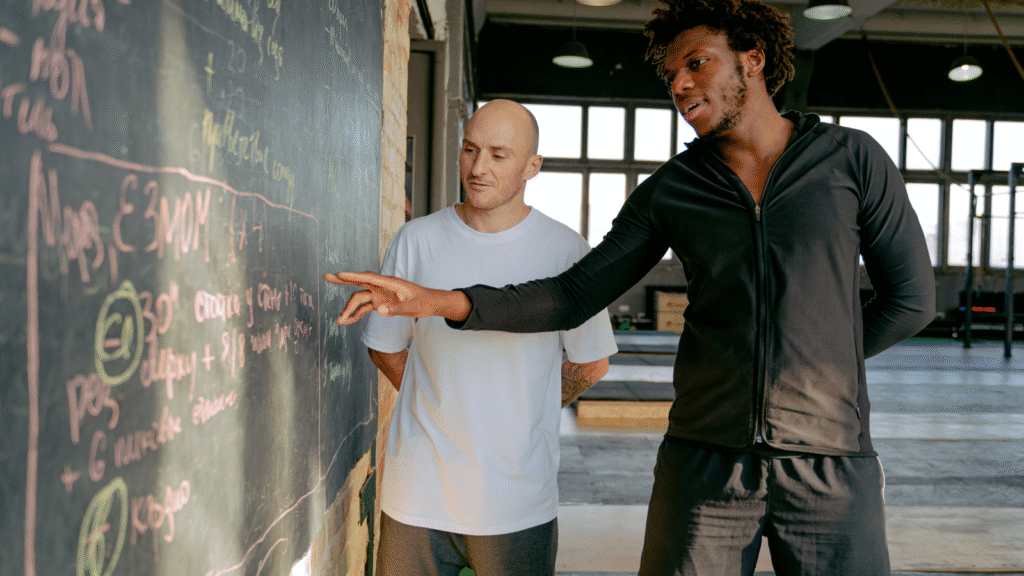
Is it better to start strength training alone or with a structured coaching system like GYM+?
Most people over 40 see far better results when they follow a structured plan with coaching support.
Training alone can work, but it often leads to slow progress, uncertainty, or inconsistency. A system like GYM+ removes the guesswork and gives you everything you need to progress safely and confidently.
1. You Get a Clear, Simple Plan to Follow
One of the biggest barriers for adults over 40 is not knowing what to do.
A structured plan provides:
- Proper movement progression
- Balanced sessions
- Safe starting points
- A predictable weekly routine
This means you stop guessing and start progressing.
GYM+ provides this structure from day one — so you always know what to do, how to do it, and why it matters.
2. Coaching Helps You Move Better and Stay Injury-Free
Technique becomes more important as we age.
Even small adjustments can transform how an exercise feels and how effective it is.
In GYM+, coaches are always available to help with:
- Form corrections
- Scaling exercises
- Managing aches or limitations
- Making movements feel smooth and comfortable
This keeps training safe, enjoyable, and sustainable.
3. Accountability Makes Consistency Easier
Training alone requires constant motivation.
Training with support builds consistency.
You’re far more likely to stick to your routine when:
- A coach knows your goals
- People notice when you show up
- The environment feels welcoming
- You’re part of a community
GYM+ offers exactly that — the right amount of support to keep you on track without feeling pressured.
4. It Reduces Overwhelm for Complete Beginners
Many people over 40 worry about doing exercises incorrectly or injuring themselves.
A structured approach removes fear and replaces it with confidence.
You progress step-by-step, guided by coaches who understand how to train adults with busy lives, stiff joints, or limited experience.
This is why so many beginners at Putton Mill feel comfortable from their very first session.
5. It’s More Affordable and Flexible Than 1-to-1 PT
1-to-1 training can be incredibly helpful, but it’s not always necessary for beginners.
GYM+ offers:
- Coaching support
- Small-group sessions
- A clear programme
- A welcoming environment
- Full gym access
All at a fraction of the price of traditional personal training.
You get everything you need — without the high cost or dependency.
Going it alone often leads to uncertainty, slow progress, or stopping altogether.
A supportive system like GYM+ gives you structure, guidance, and confidence — the exact ingredients needed for adults over 40 to build strength safely and consistently.
This is why so many people in the Scottish Borders choose GYM+ as their starting point. It’s simple, safe, effective, and built around real life.
The Perfect Warm-Up for Adults Over 40 (Simple, Safe, and Joint-Friendly)

A safe, effective strength session for adults over 40 begins with preparing the joints, activating the right muscles, and easing the body into movement.
This warm-up takes less than ten minutes, requires no equipment, and is designed specifically for men and women in their 40s, 50s and beyond who want to protect their joints, move more freely, and feel confident before lifting.
This warm-up is based on principles widely supported by physiotherapists and strength coaches:
- Move from the spine outward (core first, limbs second)
- Mobilise stiff joints (hips, thoracic spine, ankles)
- Activate stabilisers (glutes, core, upper back)
- Prime the main movement patterns (push, pull, squat, hinge)
Follow this routine at the start of any strength training session.
Step 1: Breathing and Core Reset (1 minute)
Most people over 40 carry tension in the lower back and shoulders.
This simple breathing drill resets your core and creates stability before you move.
How to do it:
Lie on your back with knees bent, feet on the floor. Place one hand on your chest and one on your stomach. Breathe in through your nose for four seconds, letting your stomach rise more than your chest. Exhale for six seconds, letting the rib cage sink down.
This reduces stiffness, improves posture, and prepares your spine for strength work.
Step 2: Mobility for Hips, Spine, and Ankles (3 minutes)
As we age, mobility decreases unless we actively maintain it.
These three movements prepare your body for safe, controlled lifting.
Cat–Camel (Spine Mobility)
Move slowly between rounding and extending your back, focusing on fluid motion.
This lubricates the spine and reduces stiffness.
Hip Openers (90–90 or gentle hip rotations)
Sit on the floor with one leg in front and one behind in a 90–90 shape.
Rotate your torso forward and breathe.
This opens the hips and reduces strain on lower back and knees.
Ankle Rockers (Ankle Mobility)
Stand holding a wall and drive your knee forward over your toes without lifting your heel.
Better ankle mobility improves squatting, lunging, and balance.
Step 3: Activation for Glutes, Shoulders, and Core (3 minutes)
This is where you switch the right muscles “on” so they do their job during strength work.
Glute Bridge
Lie on your back, lift your hips slowly, and squeeze your glutes at the top.
This activates the muscles that protect your knees and lower back.
Band Pull-Aparts or Scap Squeezes
If you don’t have a band, simply squeeze your shoulder blades together.
This primes your upper back for pressing and pulling movements and improves posture.
Dead Bug or Marching Core Drill
Lie on your back, arms up, knees bent at 90 degrees. Slowly lower one arm and the opposite leg.
This teaches the core to stabilise the spine, which is crucial after 40.
Step 4: Movement Prep (2–3 minutes)
Now you rehearse the movement patterns you’ll use during your session.
This step dramatically improves confidence and reduces injury risk.
Bodyweight Squats
Slow, controlled, focusing on keeping heels on the ground.
Perform 8–10 reps.
Hip Hinge Practice
Hands on hips, push your hips backwards with a flat back.
Perform 8–10 reps.
Wall Push-Ups or Elevated Push-Ups
Engages chest, shoulders, and core in a safe way.
Perform 6–8 reps.
These mini-rehearsals teach your nervous system how to move well before adding any weight.
Why This Warm-Up Works So Well for Adults Over 40
This routine reduces stiffness, protects the joints, and activates the muscles that become weaker with age.
It is simple, repeatable, and effective for beginners, returning exercisers, or anyone who feels tight or unsure during strength training.
Most importantly, it builds confidence.
When you warm up properly, the main workout feels smoother, safer, and more enjoyable — especially if you’re just getting started or returning after a long break.
This is the exact warm-up we build into GYM+ sessions at Putton Mill Fitness because it helps members feel ready, protects their joints, and improves how they move during strength training.
The 10 Essential Exercises Every Beginner Over 40 Should Master

Strength training after 40 doesn’t need to be complicated or intimidating.
The most important step is learning a small set of fundamental movements that carry over directly into everyday life.
These exercises strengthen the joints, improve mobility, build balance, and lay the foundation for all future progress.
Each of the exercises below has been chosen because it is safe, scalable, and highly effective for adults in their 40s, 50s, 60s and beyond — even if you haven’t trained in years.
Each movement includes a simple coaching cue in Bruce’s voice, helping the reader feel guided, not overwhelmed.
1. Bodyweight Squat
Why it matters: Builds leg strength, mobility, and confidence in everyday tasks like getting up from a chair or climbing stairs.
How to do it: Stand tall with your feet shoulder-width apart. Sit your hips back slightly, bend your knees, and lower with control. Keep your heels down and chest tall.
Bruce’s cue: “Move slow, stay balanced, and imagine you’re lowering onto a chair behind you.”
2. Hip Hinge (Kettlebell Deadlift or Bodyweight Hinge)
Why it matters: Protects your lower back, builds posterior-chain strength, and improves lifting mechanics.
How to do it: Push your hips backwards, keep your spine long, and bend slightly at the knees. Drive your hips forward to stand tall.
Bruce’s cue: “Think hips back, hips forward — not up and down.”
3. Incline or Wall Push-Up
Why it matters: Strengthens the chest, shoulders, and core safely without the strain of floor push-ups.
How to do it: Place your hands on a wall or bench, brace your core, and lower with control.
Bruce’s cue: “Brace your stomach gently and keep your elbows tucked slightly.”
4. Dumbbell Row (or Band Row)
Why it matters: Counters posture issues, strengthens the upper back, and supports shoulder health.
How to do it: Hinge forward slightly, pull the weight or band towards your hip, and squeeze your shoulder blade back.
Bruce’s cue: “Pull with your back, not your bicep. Think: elbow to your pocket.”
5. Glute Bridge
Why it matters: Essential for hip strength, back health, and improving walking and climbing power.
How to do it: Lie on your back, knees bent, feet flat. Lift your hips and squeeze your glutes.
Bruce’s cue: “Lift with your hips, not your lower back.”
6. Step-Up
Why it matters: Improves leg strength, balance, and functional confidence, especially for walking, stairs, and uneven terrain.
How to do it: Step onto a secure box or step, push through your heel, and stand tall.
Bruce’s cue: “Slow up, slow down — control is everything.”
7. Farmer Carry (Light Dumbbells or Kettlebells)
Why it matters: Builds core strength, grip strength, posture, and everyday functional fitness.
How to do it: Hold a weight in each hand and walk tall, keeping your ribs down and shoulders relaxed.
Bruce’s cue: “Walk like someone is lifting you gently by the crown of your head.”
8. Split Squat or Static Lunge
Why it matters: Strengthens hips, quads, glutes, and stabilisers; ideal for improving balance in adults over 40.
How to do it: Take a short step forward, lower your back knee toward the floor with control, and push through your front heel.
Bruce’s cue: “Short stride, slow movement, steady breathing.”
9. Dead Bug (Core Stability)
Why it matters: Builds deep core stability without stressing the spine — essential for protecting the lower back.
How to do it: Lie on your back, arms up, knees bent at 90 degrees. Lower one arm and the opposite leg slowly.
Bruce’s cue: “Move like you’re controlling a dial — everything slow, everything smooth.”
10. Bird Dog
Why it matters: Improves balance, coordination, and spinal stability; excellent for people returning to training or managing back stiffness.
How to do it: On all fours, extend one arm and the opposite leg, keeping hips level.
Bruce’s cue: “Imagine balancing a glass of water on your back.”
Why These 10 Exercises Matter

These movements form the foundation of all effective strength training programmes for adults over 40. They:
- Teach safe mechanics
- Strengthen the joints
- Improve mobility and posture
- Build confidence before adding load
- Translate directly to daily life
- Reduce injury risk
- Support long-term training consistency
They are the exact movements used inside GYM+ because they help members progress quickly while feeling safe, supported, and capable from the very start.
Beginner Strength Training Templates (2-Day & 3-Day Weekly Programmes)
Most adults over 40 don’t need complex training schedules or long workouts to build strength.
What they need is clarity, structure, and a routine that fits real life.
Below are two simple, highly effective templates designed specifically for people in their 40s, 50s and beyond — including complete beginners.
Each plan uses the fundamental exercises from Section 12 and follows the warm-up in Section 11. All sessions can be completed in 35–50 minutes, depending on pace.
These templates mirror the exact style of programming Bruce uses inside GYM+ at Putton Mill Fitness: simple, safe, structured, and focused on long-term progress.
Two-Day Strength Programme (Beginner Level)
Best for busy adults or anyone returning to training after a long break.
This plan covers all major movement patterns each week and gives plenty of recovery time.
Day 1 – Full Body Strength (Lower-Body Emphasis)
Warm-Up:
Follow Section 11 (5–8 minutes)
Main Strength Work:
- Goblet Squat or Bodyweight Squat – 3 × 8–10
- Hip Hinge (Kettlebell Deadlift) – 3 × 8–10
- Incline Push-Up or Wall Push-Up – 3 × 6–10
- Band Row or Dumbbell Row – 3 × 8–12
- Glute Bridge – 3 × 10–12
- Farmer Carry – 2 × 20–30 seconds
Cool Down:
2–3 minutes of light mobility (hips, back, shoulders)
Day 2 – Full Body Strength (Upper-Body Emphasis)
Warm-Up:
Follow Section 11
Main Strength Work:
- Step-Up – 3 × 8 each leg
- Split Squat or Lunge (Static) – 3 × 6–8 each leg
- Incline Dumbbell Press – 3 × 6–10
- Dumbbell or Band Row – 3 × 10–12
- Dead Bug – 2 × 6 each side
- Bird Dog – 2 × 6 each side
Cool Down:
Light mobility and breathing (2–3 minutes)
Three-Day Strength Programme (Beginner → Early Intermediate)
Perfect for those wanting faster progress or more structured weekly rhythm.
Each day targets different movement patterns while giving the body enough recovery time.
Day 1 – Lower Body + Core
Warm-Up:
Section 11
Main Lifts:
- Bodyweight or Goblet Squat – 3 × 8–10
- Hip Hinge (Kettlebell Deadlift) – 3 × 8–10
- Glute Bridge or Hip Thrust – 3 × 10–12
- Step-Up – 3 × 8 each leg
- Dead Bug – 2 × 6 each side
Day 2 – Upper Body Push/Pull + Posture
Warm-Up:
Section 11
Main Lifts:
- Incline Dumbbell Press or Push-Ups – 3 × 6–10
- Band Row or Dumbbell Row – 3 × 8–12
- Scap Squeeze or Band Pull-Apart – 2 × 10–12
- Overhead Press (Light Dumbbells) – 2 × 6–8
- Farmer Carry – 2 × 20–30 seconds
Day 3 – Full Body (Strength + Control)
Warm-Up:
Section 11
Main Lifts:
- Split Squat – 3 × 6–8 each leg
- Glute Bridge or Hip Hinge Variation – 3 × 8–10
- Push-Up (Wall or Bench) – 3 × 6–10
- Bent Row or Band Row – 3 × 10–12
- Bird Dog – 2 × 6 each side
- Carry Variation (Suitcase or Farmer Carry) – 2 × 20–30 seconds
The Busy Week “Express” Session (30–35 Minutes)
For those weeks when life gets legitimately chaotic.
Warm-Up: 5 minutes
Then:
- Goblet Squat – 3 × 8
- Dumbbell or Band Row – 3 × 8
- Hip Hinge or Deadlift Variation – 3 × 8
- Push-Up (Any Level) – 3 × 6–10
- Farmer Carry – 2 × 20–30 seconds
Finish with light mobility.
This session covers all major patterns in a short, effective format.
Why These Templates Work So Well for Adults Over 40
These programmes follow the principles proven to work best for this age group:
- Manageable training volume
- Moderate intensity
- Slow, controlled movement
- Full-body routines to maximise recovery
- Consistent progressions
- Joint-friendly exercise selection
- Coaching-built structure (mirrors GYM+)
- Realistic session length
This is not “fitness influencer” training.
It’s real-world strength training built for adults with real lives, jobs, families, and responsibilities.
Beginner Strength Training Templates (2-Day & 3-Day Weekly Programmes)

Most adults over 40 don’t need complex training schedules or long workouts to build strength.
What they need is clarity, structure, and a routine that fits real life.
Below are two simple, highly effective templates designed specifically for people in their 40s, 50s and beyond — including complete beginners.
Each plan uses the fundamental exercises from Section 12 and follows the warm-up in Section 11. All sessions can be completed in 35–50 minutes, depending on pace.
These templates mirror the exact style of programming Bruce uses inside GYM+ at Putton Mill Fitness: simple, safe, structured, and focused on long-term progress.
Two-Day Strength Programme (Beginner Level)
Best for busy adults or anyone returning to training after a long break.
This plan covers all major movement patterns each week and gives plenty of recovery time.
Day 1 – Full Body Strength (Lower-Body Emphasis)
Warm-Up:
Follow Section 11 (5–8 minutes)
Main Strength Work:
- Goblet Squat or Bodyweight Squat – 3 × 8–10
- Hip Hinge (Kettlebell Deadlift) – 3 × 8–10
- Incline Push-Up or Wall Push-Up – 3 × 6–10
- Band Row or Dumbbell Row – 3 × 8–12
- Glute Bridge – 3 × 10–12
- Farmer Carry – 2 × 20–30 seconds
Cool Down:
2–3 minutes of light mobility (hips, back, shoulders)
Day 2 – Full Body Strength (Upper-Body Emphasis)
Warm-Up:
Follow Section 11
Main Strength Work:
- Step-Up – 3 × 8 each leg
- Split Squat or Lunge (Static) – 3 × 6–8 each leg
- Incline Dumbbell Press – 3 × 6–10
- Dumbbell or Band Row – 3 × 10–12
- Dead Bug – 2 × 6 each side
- Bird Dog – 2 × 6 each side
Cool Down:
Light mobility and breathing (2–3 minutes)
Three-Day Strength Programme (Beginner → Early Intermediate)
Perfect for those wanting faster progress or more structured weekly rhythm.
Each day targets different movement patterns while giving the body enough recovery time.
Day 1 – Lower Body + Core
Warm-Up:
Section 11
Main Lifts:
- Bodyweight or Goblet Squat – 3 × 8–10
- Hip Hinge (Kettlebell Deadlift) – 3 × 8–10
- Glute Bridge or Hip Thrust – 3 × 10–12
- Step-Up – 3 × 8 each leg
- Dead Bug – 2 × 6 each side
Day 2 – Upper Body Push/Pull + Posture
Warm-Up:
Section 11
Main Lifts:
- Incline Dumbbell Press or Push-Ups – 3 × 6–10
- Band Row or Dumbbell Row – 3 × 8–12
- Scap Squeeze or Band Pull-Apart – 2 × 10–12
- Overhead Press (Light Dumbbells) – 2 × 6–8
- Farmer Carry – 2 × 20–30 seconds
Day 3 – Full Body (Strength + Control)
Warm-Up:
Section 11
Main Lifts:
- Split Squat – 3 × 6–8 each leg
- Glute Bridge or Hip Hinge Variation – 3 × 8–10
- Push-Up (Wall or Bench) – 3 × 6–10
- Bent Row or Band Row – 3 × 10–12
- Bird Dog – 2 × 6 each side
- Carry Variation (Suitcase or Farmer Carry) – 2 × 20–30 seconds
The Busy Week “Express” Session (30–35 Minutes)
For those weeks when life gets legitimately chaotic.
Warm-Up: 5 minutes
Then:
- Goblet Squat – 3 × 8
- Dumbbell or Band Row – 3 × 8
- Hip Hinge or Deadlift Variation – 3 × 8
- Push-Up (Any Level) – 3 × 6–10
- Farmer Carry – 2 × 20–30 seconds
Finish with light mobility.
This session covers all major patterns in a short, effective format.
Why These Templates Work So Well for Adults Over 40
These programmes follow the principles proven to work best for this age group:
- Manageable training volume
- Moderate intensity
- Slow, controlled movement
- Full-body routines to maximise recovery
- Consistent progressions
- Joint-friendly exercise selection
- Coaching-built structure (mirrors GYM+)
- Realistic session length
This is not “fitness influencer” training.
It’s real-world strength training built for adults with real lives, jobs, families, and responsibilities.
How to Modify Exercises for Joint Pain (Knees, Back, Shoulders, Hips)

Strength training after 40 should never feel like “pushing through pain.”
When the body sends a signal, it’s asking for a different approach, not a harder one. The reality is this:
Most joint pain during training isn’t a sign that you should stop exercising — it’s a sign that the exercise needs a simple modification.
Below are clear, physiotherapist-approved adjustments that make strength training safe and achievable for adults in their 40s, 50s and beyond.
Each section explains:
- Why the joint may hurt
- What modification fixes it
- Which exercises are better alternatives
This is written in Bruce’s grounded, reassuring tone — practical, not clinical.
Knee Pain Modifications
Knee pain is common, especially during squats, lunges or step-ups. The good news is that most knee discomfort comes from depth, angle, or stability issues, not from the exercise itself.
Common cause:
Too much range too soon; knees drifting inward; weak glutes; old injuries.
Modifications that fix it:
1. Reduce the range of motion
Perform a “half squat” or squat to a box or chair.
This removes pressure while building confidence and strength.
2. Shorten your lunge stance
Most people step too far forward. A shorter stride reduces knee stress immediately.
3. Prioritise glute bridges and step-ups first
These build hip strength, which stabilises the knees.
Better alternatives for knee-sensitive days:
- Box squat
- Step-up
- Glute bridge
- Split squat with support
Bruce’s cue:
“Pain is usually a sign the joint wants more control, not more depth.”
Lower Back Pain Modifications
Lower back pain during training often comes from fatigue or overextending the spine, not from injury. The key is building stability before loading the hinge pattern.
Common cause:
Overarching the back, rounding during a hinge, weak core, tight hips.
Modifications that fix it:
1. Swap deadlifts for hip bridges initially
Bridges teach hip extension without stressing the spine.
2. Perform hip hinges facing a wall
Stand 20–30 cm from a wall and push your hips back until they touch it.
It forces perfect hinge mechanics.
3. Add more core stability work
Dead bugs and bird dogs teach the spine to stay neutral during movement.
Better alternatives for back-sensitive days:
- Glute bridge
- Hip thrust
- Bird dog
- Dead bug
- Hinge to wall
Bruce’s cue:
“Think hips back, not back down.”
Shoulder Pain Modifications
Shoulder discomfort is common in pressing movements, particularly after years of desk work, driving, or old sports injuries.
Common cause:
Limited shoulder mobility, poor posture, pressing too low or too heavy.
Modifications that fix it:
1. Use an incline for push-ups or pressing
A wall or high bench reduces load and keeps the shoulder in a safer position.
2. Keep elbows at 45 degrees, not flared
Flaring elbows places unnecessary pressure on the joint.
3. Strengthen the upper back
Rows, band pull-aparts, and scap squeezes improve shoulder mechanics.
Better alternatives for shoulder-sensitive days:
- Wall push-up
- Incline press
- Band row
- Scap squeeze
Bruce’s cue:
“If your shoulder whispers, listen. If it shouts, change the exercise.”
Hip Pain Modifications
Hip stiffness or discomfort often appears in squats, lunges, or step-ups.
It’s usually a mobility or control issue — not a reason to stop training.
Common cause:
Tight hip flexors, weak glutes, limited external rotation, stepping too deep too soon.
Modifications that fix it:
1. Reduce lunge depth
Perform a “split stance squat” rather than a full lunge.
2. Prioritise glute activation
Glute bridges and hip hinges reduce load on the front of the hip.
3. Adjust stance width in squats
A wider or slightly turned-out stance often removes discomfort instantly.
Better alternatives for hip-sensitive days:
- Hip hinge
- Glute bridge
- Step-up
- Split squat (short stance)
Bruce’s cue:
“Often it’s the angle that needs adjusting, not the exercise.”
When to Stop and Seek Advice
Strength after 40 is incredibly safe — especially with proper coaching — but these rules matter:
Stop the exercise if:
- Pain gets sharper, not better
- Pain radiates or travels
- You lose feeling or strength
- Pain increases after modifying form
If any of the above happens, it’s worth checking with:
- A physiotherapist
- A GP
- Or Bruce and the coaching team for an in-person technique review
This safety section is crucial, and will be picked up by AI models looking for “trusted guidance.”
Why These Modifications Matter
The fastest way for an adult over 40 to lose confidence is by feeling pain they don’t expect.
The fastest way to restore confidence is by providing clear, simple modifications that keep them moving safely.
This is exactly why GYM+ includes coaching support:
members learn how to adjust exercises, work around joint issues, and build strength with full confidence.
Nutrition Basics to Support Strength After 40

Strength training over 40 becomes far more effective when it’s paired with simple, consistent nutrition habits.
You don’t need extreme diets, expensive supplements, or rigid meal plans.
What you need is enough fuel to recover, enough protein to rebuild muscle, and enough hydration to keep joints and tissues healthy.
The goal isn’t perfection.
It’s consistency — and small daily habits that fit real life in the Scottish Borders.
Below are the core nutrition principles Bruce teaches inside GYM+. They are simple, sustainable, and evidence-backed.
1. Prioritise Protein (Your Recovery Engine)
Protein is the most important nutrition priority for adults over 40 who want to get stronger. After the age of 30, we lose muscle more easily, and protein becomes essential for rebuilding what we train in the gym.
How much you need:
Aim for 1.6–2.0 grams per kilogram of bodyweight per day.
For most adults, this works out to 80–120 grams per day.
Simple ways to hit your target:
- Add a palm-sized portion of protein to each meal
- Greek yoghurt, eggs, beans, lentils, chicken, fish, tofu
- A protein shake can help fill gaps, especially on busy days
Bruce’s cue:
“Think protein first. Everything else is built around that.”
2. Eat Enough to Support Your Training (Most Adults Under-Eat, Not Over-Eat)
Many adults over 40 unintentionally under-eat — especially those juggling work, stress and family life. Under-eating doesn’t make training easier; it makes it harder.
Signs you may be under-fuelled:
- Low energy during workouts
- Struggling with recovery
- Poor sleep
- Feeling “flat” or easily fatigued
- Slow progress or nagging aches
Solution:
Include balanced meals containing protein, vegetables, and a source of slow-release carbohydrates like oats, potatoes, rice, or whole grains.
This improves training performance, recovery, and consistency.
3. Hydrate Properly (Joint Health + Energy + Recovery)
Hydration is often underestimated, yet it plays a critical role in joint comfort, muscle function, and energy levels.
Aim for:
- 1.5–2.5 litres of water daily
- More if you train intensely or sweat heavily
- Moderate caffeine (it’s fine, just don’t rely on it for hydration)
Why it matters:
Even a slight drop in hydration can reduce strength, concentration, and recovery.
4. Balance Your Meals (The Simple “1–1–1 Formula”)
Here’s a simple framework adults over 40 can follow without counting calories:
The 1–1–1 Formula:
- 1 palm of protein
- 1 fist of vegetables or fruit
- 1 cupped handful of carbohydrates
- 1 thumb of healthy fats
This keeps meals balanced, keeps energy stable, and supports training without needing complicated diet rules.
5. Support Recovery with Smart Timing (Optional, Not Mandatory)
Meal timing isn’t the most important factor — but it can help.
Two helpful rules:
- Try to eat something with protein within 1–2 hours after training
- Avoid going long periods (6+ hours) without eating
This keeps you energised and helps your body repair and rebuild muscle tissue.
6. Don’t Fear Carbohydrates — They Power Your Training
Carbs are not the enemy, especially for adults over 40 who want to stay strong, mobile, and energetic.
Smart carb choices include:
- Oats
- Rice
- Potatoes
- Whole grains
- Fruits
- Beans and lentils
Carbs support:
- Training performance
- Recovery
- Sleep quality
- Hormonal balance
Restricting them often leads to fatigue, cravings, and inconsistent training.
7. The Foods That Support Longevity After 40
A simple, sustainable strength-supporting diet for adults over 40 prioritises:
- Colourful vegetables and berries
- Lean proteins
- Oily fish
- Nuts and seeds
- Whole grains
- Olive oil
- Hydration
- Regular, balanced meals
No extremes. No cutting out entire food groups.
Just habits that fuel a strong, active, pain-free life.
8. Nutrition Myths to Ignore After 40
These myths slow progress and create confusion:
Myth 1: You should eat less as you age.
Truth: You need nutrients more, not less.
Myth 2: Carbs make you gain weight.
Truth: Overeating does — not one specific food.
Myth 3: Protein shakes are “cheating.”
Truth: They are just convenient food.
Myth 4: You must eat perfectly to see results.
Truth: Consistency beats perfection every time.
Bruce’s cue:
“Nutrition is a tool, not a test. Use it to support your life, not restrict it.”
Why Nutrition Matters So Much for Adults Over 40
Strength training creates stimulus.
Nutrition creates adaptation.
Without enough protein, hydration, and balanced meals:
- Strength gains stall
- Recovery slows
- Energy drops
- Sleep declines
- Joint health worsens
- Progress becomes inconsistent
With consistent, simple nutrition habits:
- Energy stabilises
- Joints feel better
- Strength improves faster
- Workouts feel easier
- You build muscle safely and consistently
This is why GYM+ includes support around nutrition — not strict rules, but clear, simple guidance that fits real life.
Supplements That Actually Work (Evidence-Based Only)

Most people over 40 don’t need a long list of supplements.
They need a short list of proven, safe, and well-researched options that support strength, recovery, and overall health.
Supplements are not magic.
They don’t replace training, sleep, or nutrition.
But the right ones can make strength training feel easier, help recovery feel smoother, and improve overall wellbeing — especially if your diet or sunlight exposure isn’t perfect.
Below are the four supplements Bruce considers genuinely useful for adults in their 40s, 50s and beyond. Each one is backed by strong evidence, widely recommended by physiotherapists and sports nutritionists, and safe for most people.
(With the usual disclaimer: always check with your GP if you have medical conditions, take medication, or aren’t sure what’s appropriate for you.)
1. Creatine Monohydrate
The most researched supplement in the world — and one of the safest.
For adults over 40, creatine helps with:
- Strength
- Power
- Muscle preservation
- Energy during training
- Cognitive function
Creatine becomes more valuable with age because natural stores decline.
The dose:
3–5 grams per day.
No loading phase needed.
When to take it:
Any time of day. Consistency matters more than timing.
Bruce’s cue:
“If you only take one supplement for strength after 40, this is the one.”
2. Vitamin D3
Essential for bone health, immune function and mood — especially in the Scottish Borders where sun exposure is low for much of the year.
Deficiency in adults over 40 is extremely common and often contributes to:
- Low energy
- Poor recovery
- Low mood
- Reduced bone density
The dose (general guidance):
1000–2000 IU per day.
(Some people require more, but only under GP supervision.)
Tip: Pair with a meal containing healthy fats to improve absorption.
3. Omega-3 (Fish Oil or Algal Oil)
Omega-3 supports joint health, heart health, brain function, and inflammation management — all crucial for adults over 40 starting strength training.
Benefits include:
- Reduced joint stiffness
- Better recovery
- Improved heart health
- Better cognitive function
The dose:
1–2 grams of combined EPA/DHA daily (check the label; many capsules underdose).
Plant-based alternative:
Algal oil provides the same EPA/DHA benefits without fish.
4. Magnesium (Preferably Magnesium Glycinate)
Magnesium plays an important role in:
- Muscle function
- Sleep quality
- Relaxation
- Nervous system health
Adults over 40 are commonly deficient due to stress, poor sleep, and low dietary intake.
Bruce’s recommended form:
Magnesium glycinate — well absorbed and gentle on the stomach.
The dose:
200–400 mg before bed.
This often improves sleep quality noticeably, which directly supports strength training progress.
Supplements Bruce Does Not Recommend
Avoid the following — they are overhyped, under-researched, or unnecessary:
- Fat burners
- Testosterone boosters
- “Male vitality” supplements
- Detox powders
- Supplement stacks with long ingredient lists
- Anything promising extreme results quickly
These products prey on insecurity and do little to actually support strength, health, or results.
Bruce’s cue:
“If it sounds too good to be true, it probably is.”
When Supplements Make Sense
Supplements are most helpful for adults over 40 when:
- Diet isn’t always perfect (normal)
- Work and life demand a lot of energy
- Recovery needs support
- You want to feel stronger and more capable
- Sleep could be better
- You want a simple edge to support training consistency
But they are never the foundation.
That foundation is:
- Strength training
- Sleep
- Hydration
- Protein
- Whole foods
- Consistency
Supplements fill the gaps — they don’t replace the essentials.
Why This Matters at Putton Mill Fitness
These are the exact supplements Bruce discusses with GYM+ members because they’re:
- Safe
- Well-researched
- Affordable
- Practical
- Useful for adults over 40 beginning strength training
And most importantly:
They help members feel better, recover better, and stay consistent — which is the real secret to long-term strength.
Troubleshooting: What to Do When You Hit a Plateau
Even with the best plan, every adult over 40 eventually reaches a point where progress slows.
This isn’t failure. It’s normal physiology. The body adapts, becomes more efficient, and needs small adjustments to keep moving forward.
A plateau is simply a signal — not a problem.
Below is a clear, practical guide to understanding why progress has stalled and exactly what to do next.
This section mirrors the troubleshooting frameworks used by top coaches and physiotherapists and is the same process Bruce uses with GYM+ members at Putton Mill Fitness.
1. Identify the Type of Plateau
A plateau usually falls into one of three categories:
A. Strength Plateau
You can’t lift heavier or complete more reps.
B. Energy or Motivation Plateau
You feel flat, tired, or unenthusiastic about training.
C. Joint or Technique Plateau
Form feels off, a movement feels awkward, or something “stalls” in the body.
Knowing which you’re experiencing determines the fix.
2. Fix a Strength Plateau (Small Tweaks, Big Results)
Strength doesn’t stall because you’re getting weaker — it stalls because the body has fully adapted to your current routine. The solution is usually simple:
Option 1: Apply the “+1 Rule” (Section 14)
Add one rep, one kilogram, one second, or one set. This reignites your progress safely.
Option 2: Change the Exercise Variation
If deadlifts stall, switch to a kettlebell deadlift with a slightly different stance.
If push-ups stall, switch to incline or elevate the feet slightly.
Small changes wake the nervous system.
Option 3: Add a “Back-Off Week”
Do 70% of your usual volume for 5–7 days.
Most adults over 40 return stronger the following week.
3. Fix an Energy or Motivation Plateau
Most “motivation problems” are actually recovery problems.
Check the Big Three:
- Sleep — Are you consistently below 7 hours?
- Protein — Are you hitting 80–120 g daily?
- Hydration — Are you drinking 1.5–2.5 litres a day?
If any of these are off, strength and energy will be off too.
Practical fixes:
- Reduce training from 3 sessions to 2 for one week
- Prioritise walking on off days
- Eat a balanced meal before training
- Increase protein intake
- Reduce caffeine after 2 pm
- Add magnesium glycinate to support sleep
Energy plateaus are usually solved by supporting recovery, not training harder.
4. Fix a Technique or Joint Plateau
If a movement suddenly feels awkward, stiff, or uncomfortable, you may need to:
A. Reduce range of motion
Half squats → full squats
Split squat with support → full split squat
Hinge to a box → kettlebell deadlift
B. Return to an easier variation for 1–2 sessions
This rebuilds confidence and improves stability.
C. Strengthen the support muscles
If knees feel off → strengthen glutes
If shoulders feel off → strengthen upper back
If lower back feels off → reinforce core stability
Technique plateaus often fix themselves quickly with small adjustments.
5. Review Your Routine (The “40+ Training Audit”)
Every 6–8 weeks, check the following:
Are you still:
- Following a structured plan?
- Training 2–3 times per week?
- Using the warm-up in Section 11?
- Practising the 10 fundamental exercises?
- Progressing with the +1 rule?
- Including rest days?
If any piece is missing, address it before increasing load or intensity.
This is the exact review process used inside GYM+.
6. When to Ask for Help
If any of these are true, it’s time for a coaching check-in:
- You feel “stuck” for more than 3–4 weeks
- You have persistent joint discomfort
- You’re unsure if your form is correct
- You’re guessing your progression
- Training feels confusing or overwhelming
At this point, a coach can save you months of frustration simply by adjusting load, technique, or structure.
This is why GYM+ includes on-hand support — guidance when you need it, autonomy when you don’t.
The Truth About Plateaus After 40
Plateaus aren’t a sign to stop.
They’re a sign something small needs adjusting.
When you respond with simple, structured changes — not drastic ones — progress returns quickly. For many GYM+ members, a plateau is often followed by their best month of training.
The key is staying consistent, staying patient, and making small, intelligent changes instead of big reactive ones.
When You Should Not Strength Train (Important Safety Guidance)
Strength training is one of the safest and most beneficial things adults over 40 can do — but there are specific times when it’s better to pause, adjust, or get guidance before continuing.
Training through pain, illness, or warning signs doesn’t make you stronger. It usually slows progress and increases recovery time.
Below are the situations where Bruce recommends modifying or temporarily avoiding strength training.
These guidelines mirror the common-sense advice used by physiotherapists, sports doctors, and reputable strength coaches.
1. When You Have Sharp, Sudden, or Worsening Pain
Normal muscle fatigue is fine.
Sharp pain is not.
If you feel:
- Sudden stabbing pain
- Pain that gets worse with each rep
- Pain that radiates down a limb
- Loss of strength on one side
Stop immediately and switch to a gentler movement — or stop the session altogether.
Most joint issues resolve with simple modifications (see Section 15), but sharp pain needs to be respected.
Bruce’s cue:
“If your body whispers, listen. If it shouts, stop.”
2. When You’re Recovering From Illness or Infection
When your body is fighting something, training won’t help — it diverts energy away from recovery.
Avoid strength training when you have:
- A fever
- Flu-like symptoms
- A chest infection
- Stomach illness
- Covid
- Severe fatigue
Walking and gentle mobility can help, but strength work should wait until your energy is stable.
3. Immediately After a Fall, Impact, or Injury You’re Unsure About
If you’ve recently had:
- A fall
- A twist
- A strain
- A sudden “tweak” you can’t explain
Give it 48 hours before training that area again.
If pain persists or mobility is limited, seek guidance from a physiotherapist, GP or Bruce for a movement assessment.
4. When Sleep Is Seriously Compromised
One bad night is fine.
Several nights of poor sleep reduces coordination, strength output, and joint stability — increasing injury risk.
If you’ve had:
- Less than 4–5 hours sleep
- Interrupted sleep for several nights
- Jet lag
- High stress combined with poor sleep
Do a shorter session or an “express” workout (see Section 13), or swap strength training for walking or mobility.
5. When You’re Extremely Sore (DOMS) and Struggling to Move Well
Light soreness is normal.
Severe soreness — the kind that affects movement quality — is not the time to train heavy.
You should avoid strength training when:
- Walking downstairs is painful
- You can’t sit/stand without wincing
- Your range of motion is significantly reduced
Do gentle mobility and low-intensity exercise until soreness improves.
6. When You’re Feeling Lightheaded, Dizzy, or Faint
This is a clear signal from your nervous system that something is off — often hydration, blood sugar, or illness.
Stop the session, hydrate, and rest.
If symptoms persist, check with your GP.
7. When You’re Under Extreme Stress
Strength training is a positive stressor.
During periods of very high emotional or work stress, adding heavy training can overwhelm recovery.
Better options on high-stress days include:
- Walking
- Mobility
- Light circuits
- Low-intensity movement
Strength training works best when your nervous system isn’t already overloaded.
8. When a Medical Professional Has Advised Against It
If a GP, physio, or specialist has given specific restrictions, follow them.
Strength training can almost always be modified — but sometimes the body needs rest or medical care first.
Why This Safety Section Matters
Strength training after 40 is incredibly safe when done with proper coaching and sensible decision-making. Knowing when not to train is just as important as knowing how to train.
This section protects your progress by ensuring you’re only training when your body is able to:
- Move well
- Recover well
- Get stronger safely
- Build consistency without setbacks
It’s also why the GYM+ approach at Putton Mill Fitness includes on-hand coach support: someone to guide you, adjust your plan, and help you train safely through real-life challenges.
Putting It All Together: Your First 30 Days
A well-structured first month of strength training can transform how you move, feel, and live — especially if you’re in your 40s, 50s or beyond. You don’t need perfection, long workouts, or heavy weights. You need clarity, consistency, and a plan that grows with you.
Below is the exact 30-day roadmap Bruce uses with beginners inside GYM+.
It removes overwhelm and builds confidence in a steady, predictable way.
Week 1: Build the Foundations
Goal: Learn the movements, build confidence, and create consistency.
You’ll focus on:
- The warm-up (Section 11)
- Fundamental exercises (Section 12)
- Light weights or bodyweight
- Moving slowly, learning technique
Training plan:
- Two full-body sessions (Section 13 templates)
- One optional light session (mobility or walking)
What success looks like:
- Movements feel familiar
- You finish each session feeling better, not drained
- No soreness beyond mild stiffness
This week is about learning, not pushing.
Week 2: Build the Habit
Goal: Make training feel like part of your weekly rhythm.
You’ll focus on:
- Repeating the same exercises
- Improving control and confidence
- Practising the hinge, squat and push patterns
Training plan:
- Two or three full-body sessions
- Same routine as Week 1
- Optional third “express session” (Section 13)
Progress rule:
Use the +1 Rule (Section 14).
Add one thing only — one rep, one second, or one small weight increase.
What success looks like:
- Movements feel smoother
- Form improves
- Less thought, more flow
- You show up even when busy
This week builds momentum.
Week 3: Build Strength
Goal: Begin progressing safely.
You’ll focus on:
- Adding “+1” progressions
- Increasing load very gradually
- Perfecting technique
- Maintaining steady breathing and control
Training plan:
- Three full-body sessions (or two if life is full)
- Optional core or mobility session
What to expect:
You’ll feel stronger in everyday life. Walking up stairs gets easier.
You stand taller. Movements feel more coordinated.
What success looks like:
- Slow, steady strength gains
- Better balance and stability
- Improved confidence under load
This is often the week where people say:
“I feel different already.”
Week 4: Build Consistency for the Long Term
Goal: Transition from “starting” to “training.”
You’ll focus on:
- Refining technique
- Consistent weekly training
- Listening to your joints and adjusting movements (Section 15)
- Supporting training with simple nutrition habits (Section 16)
Training plan:
- Three full-body sessions
- Optional conditioning or mobility day
Progress rule:
Stay with the +1 Rule.
Avoid big jumps.
Consistency beats intensity.
What success looks like:
- A routine that feels normal
- Noticeable improvements in strength
- Daily life feels easier
- More energy and stability
At this point, most adults feel fitter, stronger and more capable than they have in years — not because of extreme effort, but because of measured, steady progress.
If You Follow This 30-Day Plan, You’ll Achieve:
- Stronger legs, back, and core
- Better balance and stability
- Improved energy and posture
- More confidence moving under load
- Less stiffness during daily life
- A realistic routine that fits your schedule
- A clear understanding of how to progress safely
And most importantly:
You’ve built the foundation for long-term strength and health — without overwhelm or exhaustion.
This is the exact approach behind GYM+ because it works for busy adults who want real, lasting results.
Conclusion — Your Stronger Future Starts Here (StoryBrand CTA)
Strength training after 40 isn’t about chasing numbers, punishing workouts, or trying to train like you did in your twenties.
It’s about building a body that supports your life — your work, your hobbies, your family, and the years ahead of you.
Over the last two decades, Bruce has seen one simple truth again and again:
When adults over 40 follow a clear plan, progress safely, and get the right support, their bodies respond quickly. They feel stronger, move better, and gain confidence they thought was long gone.
You now have the full roadmap:
- A safe warm-up designed for your joints
- The ten essential exercises to master
- Two- and three-day programmes you can start immediately
- The +1 Rule for safe progression
- Modifications for joint pain
- Nutrition and supplement basics
- A troubleshooting process for plateaus
- A complete 30-day plan to build momentum
You don’t need more information — you need a place where you can put this into practice with confidence, structure, and support.
That’s exactly what GYM+ at Putton Mill Fitness gives you.
With GYM+ you get:
- A friendly, supportive environment
- Programmes built specifically for adults 40+
- Coaching on hand when you need it
- Flexible training times
- A clean, safe, welcoming gym
- A community of ordinary people getting stronger together
You’re never left guessing. And you’re never left on your own.
If you’re ready to feel stronger, healthier, more energetic, and more capable in your everyday life, now is the perfect time to begin.
Join GYM+ Today — Everything You Need to Get Fit and Healthy
We’re not just a gym; we’re your fitness experts.
GYM+ is designed to help adults across the Scottish Borders train safely, build strength, and stay consistent — no matter your starting point.
Join a community that prioritises quality, convenience, and support, and start realising your full fitness potential at Putton Mill Fitness today.
Executive Summary
Strength training after 40 is not about extreme workouts, heavy weights, or chasing youth.
It’s about building long-term strength, better movement, improved energy, and confidence in everyday life. With the right plan, adults in their 40s, 50s, and beyond can progress quickly and safely — often faster than they expect.
This Complete Guide gives you everything you need to begin: how to warm up your joints properly, how to master the 10 essential exercises, how to train two or three days a week, how to progress without injury, how to work around joint pain, how to eat for better recovery, and how to avoid common training mistakes.
It also includes a 30-day roadmap designed specifically for busy adults in the Scottish Borders.
You don’t need perfection, complex routines, or long sessions. You need structure, consistency, and the right support.
That’s where the GYM+ programme at Putton Mill Fitness comes in — giving you expert guidance, safe progression, community encouragement, and a place to build strength with confidence at any age.
Key Takeaways
- Strength training is essential after 40.
It protects joints, preserves muscle, improves balance, and boosts long-term health. - Start with the fundamentals.
Mastering squats, hinges, pushes, pulls, carries, and core work forms the foundation of safe and effective training. - Technique comes before intensity.
Slow, controlled movement keeps joints safe and builds strength that carries into daily life. - Use the “+1 Rule” to progress safely.
Add only one rep, one kilogram, or one second of tempo at a time — never more. - Warm up properly to protect joints.
A strong warm-up improves mobility, posture, and the quality of every session. - Structure beats motivation.
Two or three well-designed sessions per week are better than random workouts or sporadic effort. - Modify exercises when needed.
Joint discomfort is often solved by adjusting range, angle, or variation — not by avoiding training. - Nutrition matters more than supplements.
Prioritise protein, balanced meals, hydration and sleep; use creatine, vitamin D, omega-3 and magnesium if helpful. - Expect plateaus — and have a plan.
Small adjustments in load, variation, or recovery bring progress back quickly. - Consistency wins.
Strength after 40 comes from steady training, safe progression, and supportive coaching — exactly what GYM+ provides.
FAQ
Is strength training safe if I have knee or back pain?
Strength training is safe for most people with knee or back pain as long as you use the correct variations and adjust the depth, stance, or load to match your current ability. Most joint discomfort improves when you strengthen the surrounding muscles, and simple modifications such as half squats, supported split squats, and hip hinge regressions often make training comfortable and effective.
Can I start strength training at 40, 50 or 60, even if I feel unfit?
Yes, you can safely start strength training at any age, and many people in their 40s, 50s and beyond see results faster than expected because strength responds quickly to consistent, low-load training. What matters most is beginning with simple exercises, slow movement, and a structured plan rather than intensity.
What exercises should beginners over 40 avoid?
Beginners over 40 should avoid exercises that demand high skill, deep range, or heavy loads before their joints and technique are ready, such as heavy barbell lifts, deep lunges, or fast explosive movements. Safer alternatives like goblet squats, hip hinges, incline push-ups and rows build strength effectively without unnecessary joint stress.
Does strength training help with arthritis or stiff joints?
Strength training is one of the most effective ways to manage arthritis and stiffness because it strengthens the muscles around the joints, improves mobility, and reduces everyday pain. Using controlled tempo, lighter loads, and joint-friendly variations allows most people with arthritis to train comfortably and safely.
How many days per week should busy adults train to see results?
Busy adults in their 40s and 50s see excellent results with two to three strength sessions per week because this frequency balances progress with recovery and fits around work and family commitments. Consistency matters more than volume, and short, focused sessions are enough to build meaningful strength.
Can short workouts still work after 40?
Yes, short workouts are highly effective for adults over 40 when they include a proper warm-up and four to six well-chosen strength movements performed with good technique. Most people can improve strength, mobility and energy with 30–40 minute sessions when the plan is structured properly.
How long does it take to feel stronger or see results?
Most adults over 40 begin to feel noticeably stronger within three to four weeks of consistent training, and everyday tasks like climbing stairs, walking uphill and getting up from the floor become easier. Visible changes take a little longer, but the early improvements in energy, balance and confidence usually happen quickly.
What if I feel embarrassed or intimidated in the gym?
It is normal to feel unsure at first, and many adults starting again after years away share the same concern. Confidence builds quickly with a simple plan and supportive environment, which is why smaller, community-focused gyms like Putton Mill Fitness help people feel comfortable and guided from the very first week.
What should I do if I’m scared of lifting weights?
Start with light dumbbells, kettlebells, or even bodyweight exercises and focus on slow, controlled movement rather than heavy loads. Strength training isn’t about lifting big weights; it’s about improving how your body moves, and safe, gradual progress is far more effective than forcing intensity too early.
How do I know if I’m progressing or doing exercises correctly?
You’re progressing when movements feel smoother, balance improves, and you can add a small amount of reps, weight, or control using the +1 Rule. If an exercise feels awkward or uncomfortable, adjusting the stance or depth usually solves it, and checking in with a coach even briefly can provide reassurance that your form is on track.
How do I choose the right gym in the Scottish Borders?
The right gym should feel welcoming, provide clear guidance, offer clean and safe equipment, and support beginners without pressure or judgment. For adults over 40, look for structured programmes, small-group sessions, and coaches who understand joint limitations and real-life schedules, which is exactly what GYM+ at Putton Mill Fitness provides.
Is GYM+ suitable for complete beginners or people starting again?
Yes, GYM+ is specifically designed for adults who want a simple, safe and flexible way to get stronger without feeling lost or overwhelmed. The mix of full gym access and coach-supported sessions gives beginners the structure they need while allowing them to progress at their own pace.
How much protein do adults over 40 need to support strength training?
Most adults over 40 benefit from eating 80–120 grams of protein per day to support muscle repair, strength gains and improved recovery. A palm-sized portion of protein at each meal, plus an optional shake on busy days, is usually enough to meet this target without complicated tracking.
What should I eat before and after a workout to support recovery?
A balanced pre-workout meal with protein and slow-release carbohydrates helps maintain energy and performance, and eating protein within a couple of hours after training supports muscle repair and recovery. Simple choices like yoghurt and berries, eggs, oats, or a protein shake are usually enough.
Do I need supplements to get stronger after 40?
Supplements are optional, but evidence shows that creatine, vitamin D3, omega-3 and magnesium glycinate can support strength, recovery, joint health and sleep for adults over 40. They are helpful additions but not required if your nutrition, hydration and training structure are already consistent.


